Get your FREE GUIDE '7 Steps to grow a Quilt Pattern Design Business'

quilting books
Quilting books are great resources for learning about quilting techniques and designs. They also provide inspiration for new projects. There are three categories of quilting books that apply for different purposes.
Quilting books are great resources for learning about quilting techniques and designs. They also provide inspiration for new projects. There are three categories of quilting books that apply for different purposes.
What kind of quilting books are there? What quilting books should you start with if you are a beginner quilter, or which books on quilting are better if you are a more advanced quilter?
Quilting books are an excellent resource for learning how to create beautiful quilts. These books include patterns, instructions, and step by step tutorials on how to complete each project. Books can also be an amazing source of inspiration too – and not only quilting books.
Let’s take a look at three categories of quilting books and how we can use quilting books for more than just their face value.
Check out the video to see me talking about the different categories of quilting books. Including my bonus third category!
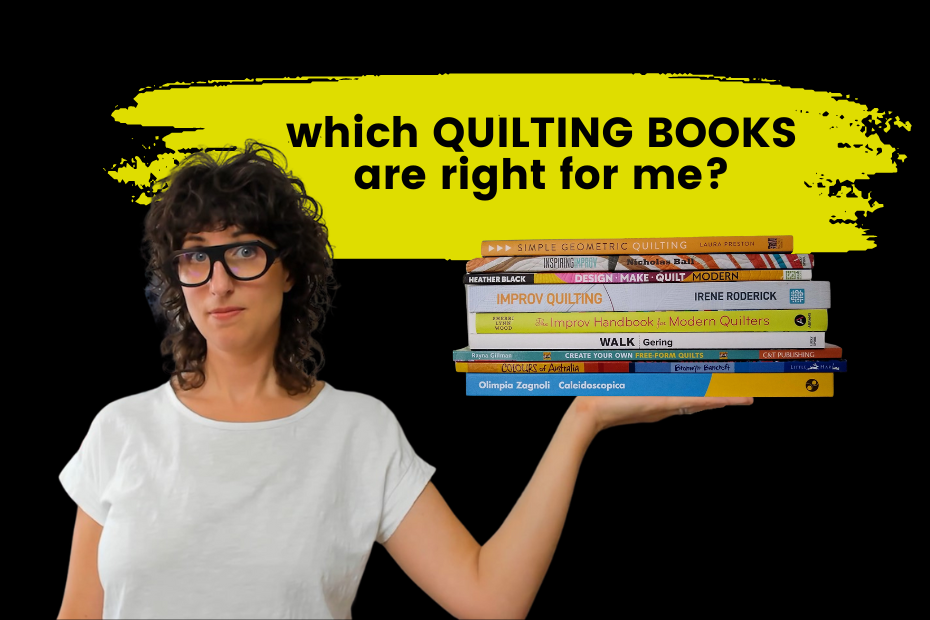
Three Categories
I think about books for quilting in three categories:
Project based books – showing you how to complete set projects (quilts, pillows etc.) with step by step instructions to reproduce what the author has created.
Technique based books, showing you a particular process, but leaving you fairly free to use this technique as you see fit, and apply it to your own work.
And a third category of books that I turn to often, that are a little outside the box. So stick around to find out what my third category of quilting books is.
So, let’s jump in and I’ll talk a little bit about each book. Again, this is just my collection of quilting books. There are many many more out there.
Start with a Simple Design.
If you’re just starting out, start with simple designs. You can use these as practice pieces before moving onto more complex designs. For this I would recommend the first category of quilting books I talk about in the video. They are project based books.
I have to be honest and say I have never actually made an entire project from any one of these books. I am more of a browser, and like to get ideas, or learn specific techniques from books as opposed to reproducing exactly the same quilts as in the project. But I wanted to share these with you as they not only layout the patterns to follow, but also outline particular techniques to recreate the projects they contain.
These books are great if you like to have a set series of instructions to follow to complete a project.
Heather Black’s book Design Make Quilt Modern outlines her design process first before jumping into 4 of her project quilts which use a lot of different techniques from applique to curves and more.
It has a super modern vibe, so is that is your jam, you will really enjoy this book.
The next is Simple Geometric Quilting by Laura Preston- wonderful clean layout and pattern instructions, she covers projects of all sizes, from pillows to baby quilts right up to queen size projects, including detailed fabric quantities and cutting instructions and layouts as well as all the steps to complete the projects.
Lastly I wanted to include Nicholas Ball’s book Inspiring Improv – yes an improv book but in the project category… He does go into the improv techniques he uses but the majority of the book is about how he uses these techniques in specific projects, with more prescriptive steps to each project.
A great way to work in improv if you are starting out with more help in the steps to achieve a finished project.
OK, so that wraps up quilting books I wanted to mention on projects. Up next, let’s look at technique based quilting books.
technique – add details as you go
As you learn new techniques, add details to your design. This will help you develop your own style and make your work unique. A great way to learn new techniques ins to get more technique based books, like the ones I outline in the video.
Videos are great, but sometimes I like the silence and immediacy and intimacy of leafing through a book to get a set of technique instructions explained to me.
Taking a look at what I would classify as the technique based books on my shelf, I have clearly a lot of improv books which I really love for the inspiration they trigger.
I can leaf through these and get ideas on how to use fabric often in ways that I hadn’t thought of before.
It also helps me shortcut when there is something crazy I want to sew and I can check through these books to see if I am going to be wasting a lot of time trying to sew something that is impossible, or if there is a better way to do what I am trying to achieve.
An example might be, trying to come up with a wonky chequer board, and to start off you might try sewing small square together, then find a technique that describes sewing wonky strips and then re-cutting and sewing them together.
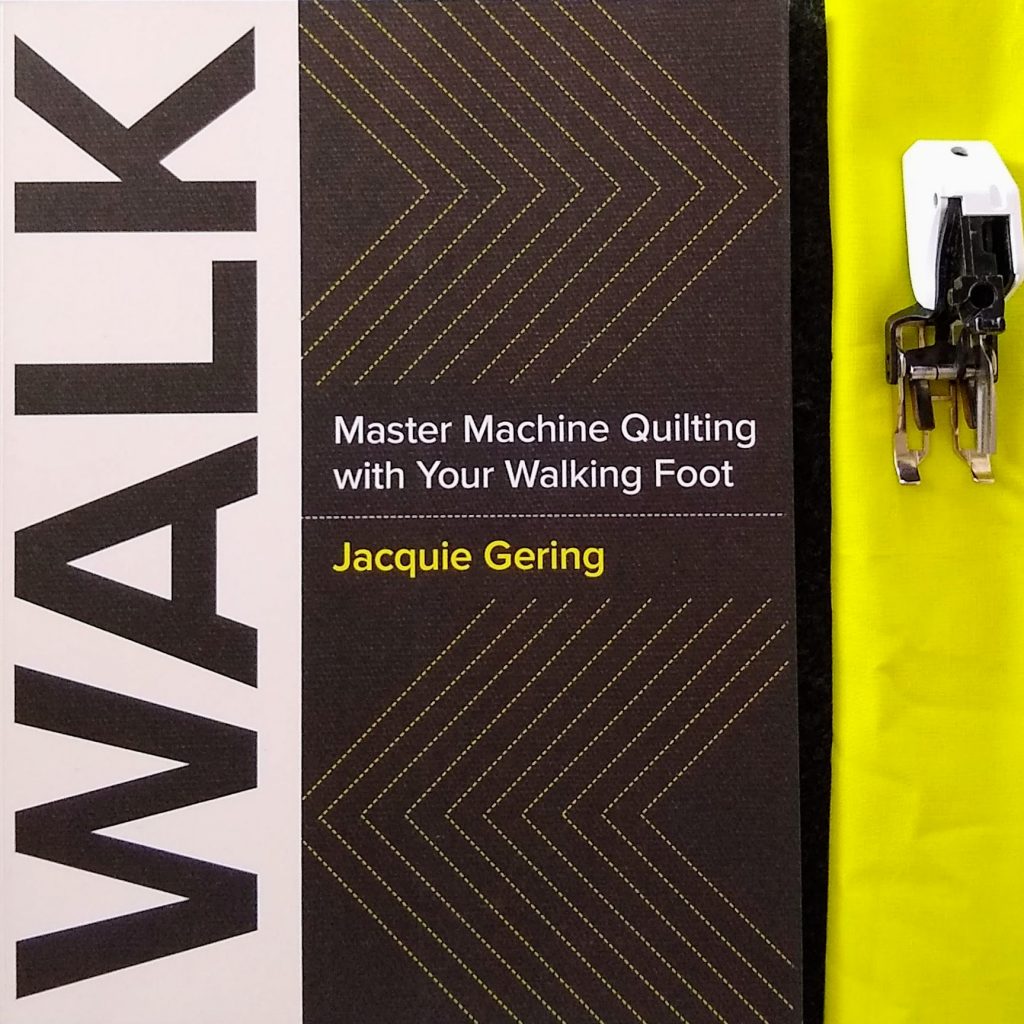
Another type of techniques book is one like Jacquie Gering’s book Walk where you are learning a very specific technique, in this case walking foot machine quilting. This covers all the basics from how to set up your machine, needles to use, etc. as well as giving instructions on how to reproduce some of the walking foot designs.
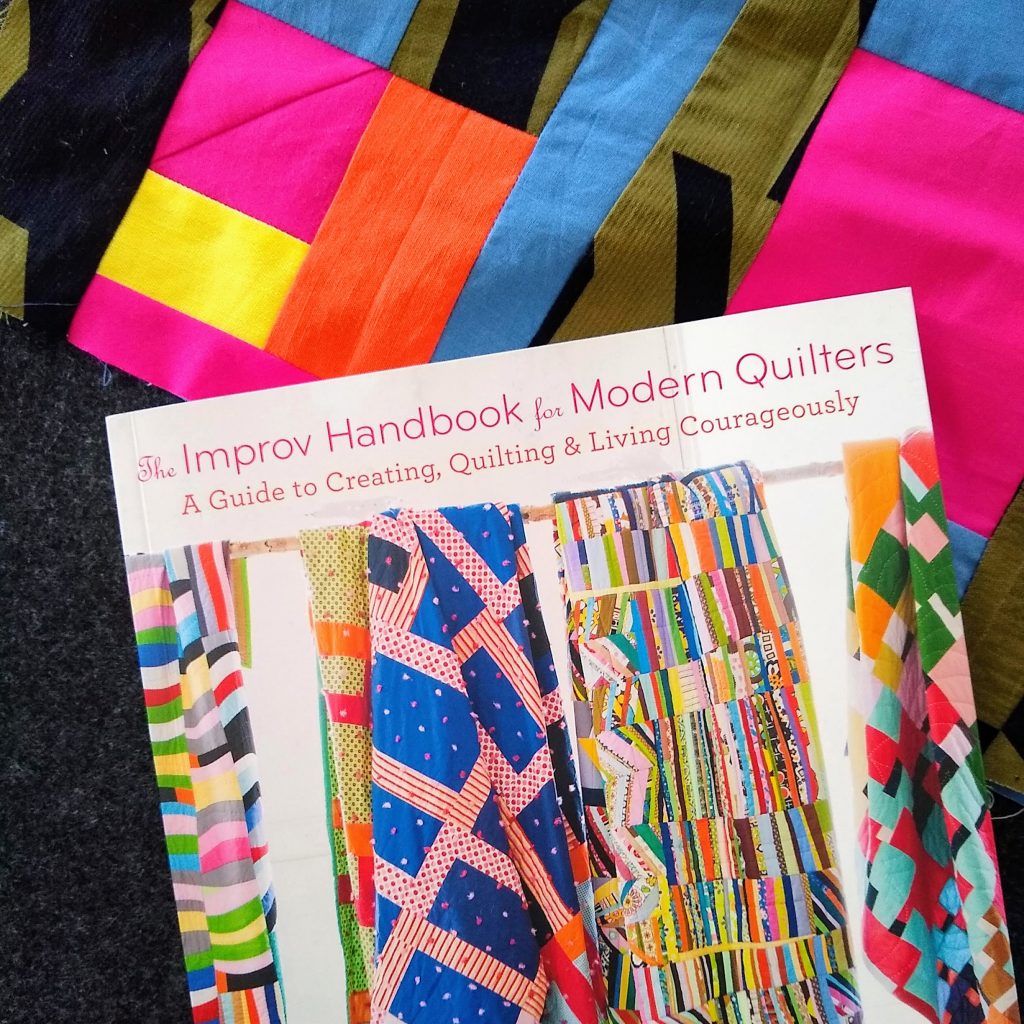
This book The Improv Handbook fro Modern Quilters is particular in that Sherri Lynn Wood sets out what she calls ‘scores’ that give you a framework to work with but ultimately the outcome is dictated by you. It has an extensive section on techniques she uses in her quilt making which is why I included it here in the techniques section.
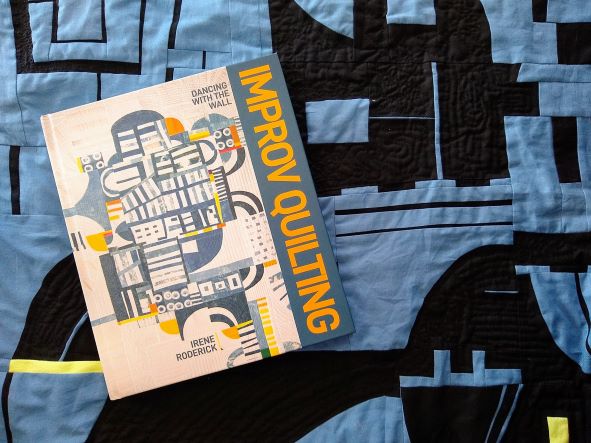
The final book is a masterpiece by Irene Roderick – and goes deep and wide on the techniques she uses to make her quilts. There is a super short section on a project quilt because ultimately the book is about the process Irene uses. Her introduction states clearly:
‘the real reason for the book is to be a guide for you to find your own creative voice through a process of letting go of all expectations, all plans, all patterns’
IRENE RODERICK
Which is actually so much harder to do than say, trust me…
BONUS! My third category of books…
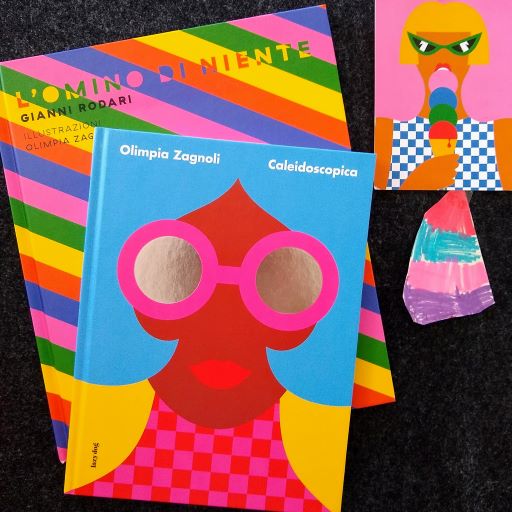
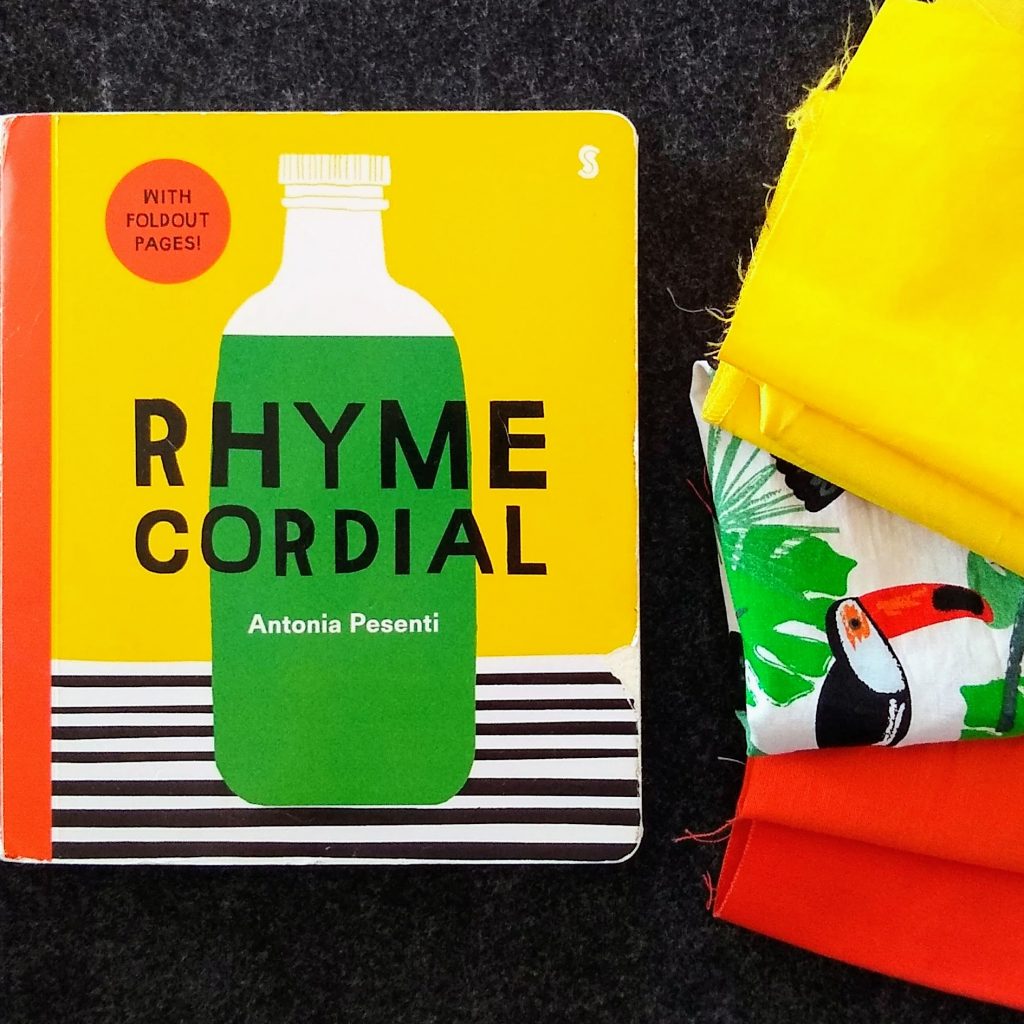
Ok, so, drumroll!! here is my bonus category of quilting books: kids books! Say what?? Bear with me. You might have sent the short video I did on all the quilts that appear in kids books, but that is not what I use these kids books for.
I mostly love kids books for color inspiration!!
Just look at these! The colors are amazing! Colours of Australia by Bronwyn Bancroft IS particularly awesome, I mean.… The shapes and colours, just make me think straight away of organic piecing and quilting…
Olympia Zagnoli is an Italian illustrator whose work I love. Her colors, shapes, clear design. All drool worthy!!
And I LOVE this book Rhyme Cordial by Antonia Pesenti. The stylization, the clearly defined shapes and yes, again the colors…
Why quilting books are so useful
A quilt book will give you ideas for different ways to make your own unique quilts. It will also help you learn how to design and construct them.
There is no right or wrong type of quilting book, just ones that you like or don’t like. You could borrow some from your local library and try them out before deciding if there are some you would like to purchase and keep referring back to.
I seem to have amassed a small collection of quilting books over the past few years, I am definitely an analogue book kind of person. Don’t discount other types of books that you can use for quilting as well, whether they are sewing books or books just for inspiration.
Which quilting books are right for you?
If you are starting out as a quilter, I would suggest looking for more project based books as these give you more guidelines to follow and explain in detail each of the techniques you will need to use to compete the projects. A great way to get inspiration and learning in one place!
Overall, I’d say, look for technique-based books if you are a more experienced quilter and want help in a specific area that you know you have been challenged by in past or current projects. These type of books are less prescriptive and allow you to make more choices in your own designs.
What about you, what kind of quilting books do you like to use: project based books or technique based books?
What kind of books give you inspiration? Leave a comment down below and let me know.
Hi Ally, I’m following your workshops. Super useful. I love quilting books too and other textile books that are great for inspiration. I have a wall ful!
I’m super excited because I have just published my first quilt book and it’s definitely outside the box but hopefully super inspirational. I have written it together with Peruvian tapestry weaver, Maximo Laura and it’s called Quilt inspired by Maximo Laura. He is like a Kaffe Fassett but in tapestry weaving. I think your workshop will help make my step by step chapters in my next book better but it’s hard to find the time to learn Adobe although I need to.
Your question about why do you create? Answer: because I have to and I love it. If I don’t do something creative for a week or two I start to get tetchy and unhappy and uncomfortable.
But it’s super fun to see that I improve and gain confidence over the years.
Thanks for your very organised workshop. I’m getting some really useful pointers.
Rosalind
Hi Rosalind – thank you! So glad you’ve found the workshop useful. Your book sounds super interesting – I’ll be looking it up! Enjoy the workshop and hope to see you on one of the live calls today/tomorrow.
I have many more project based books, but I rarely use them to complete that particular project! One example is a circle of nine-an interesting way to put 9 special blocks together. Lots of fun to design new quilts.
Hi Lois, I tend to use project books the same way – hints on how to do other things. I’ll have to check circle of 9 out – sounds cool! Thanks for commenting.
I like technique based books like The Quilter’s Negative Space Handbook
Awesome! I will have to check this one out. Do you use a lot of negative space in your quilts Denise?