I had a fantastic observation sent in by one of my readers Kimberly:
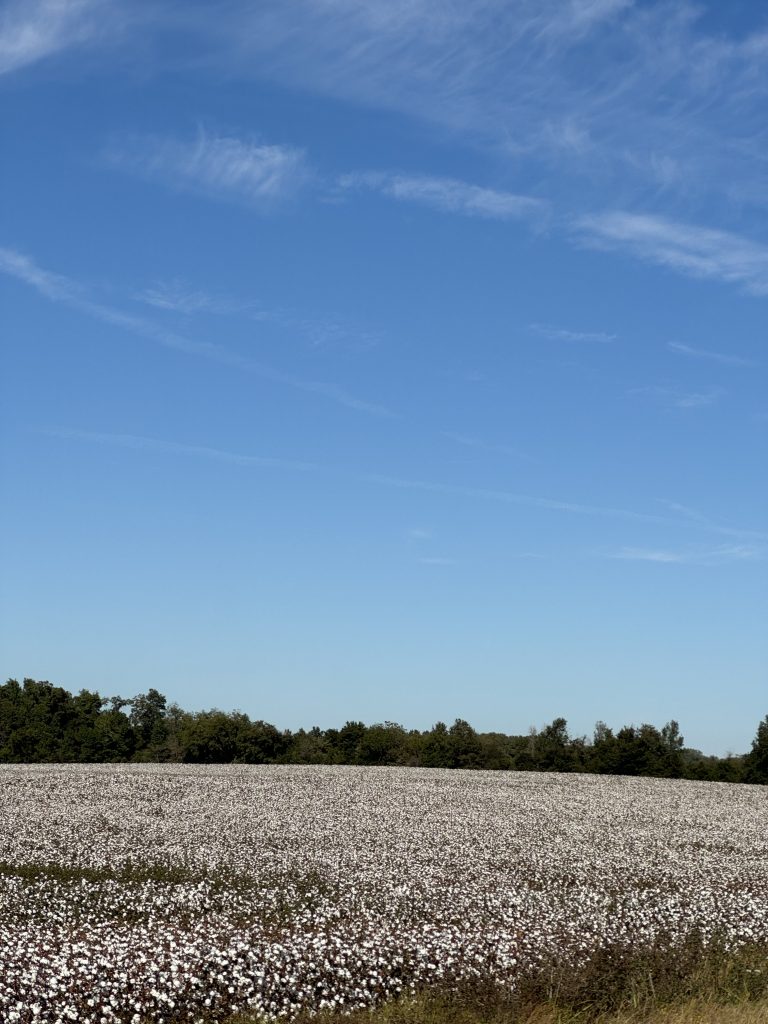
I moved to Tennessee in the USA in August and now live in a region that grows and harvests cotton (the pic was taken near my house shortly before harvest). Driving by the fields, I can’t help but wonder where it all goes. Does any of it end up in the fabric I buy and sell? The clothes I wear? The sheets I sleep on?
Image from reader Kimberly G.
The most common questions I’ve had from readers so far in this series are:
‘where does the cotton I see growing end up’ and ‘where does the cotton I buy come from?’
We kicked off this global journey with visits to East Africa, the Caribbean, the Indus Valley, South America…
But where does the cotton we use today come from?
The rabbit hole goes deeper…
the story in numbers
As an engineer, I love to look at the numbers. I’m not on par with my husband’s epic nerd level love of statistics, but I do like a good graph.
So when I started looking at the numbers on where cotton is produced, it was surprising to me that there was this strange overlap between top producers, exporters and importers.
Why produce and import?
Why export and import?
What’s the correlation between raw goods going out and finished goods coming in?
What story do these numbers tell us about where cotton is produced, where it is worked into finished products (thread, fabric, garments), and who consumes those finished products?
the internet of things
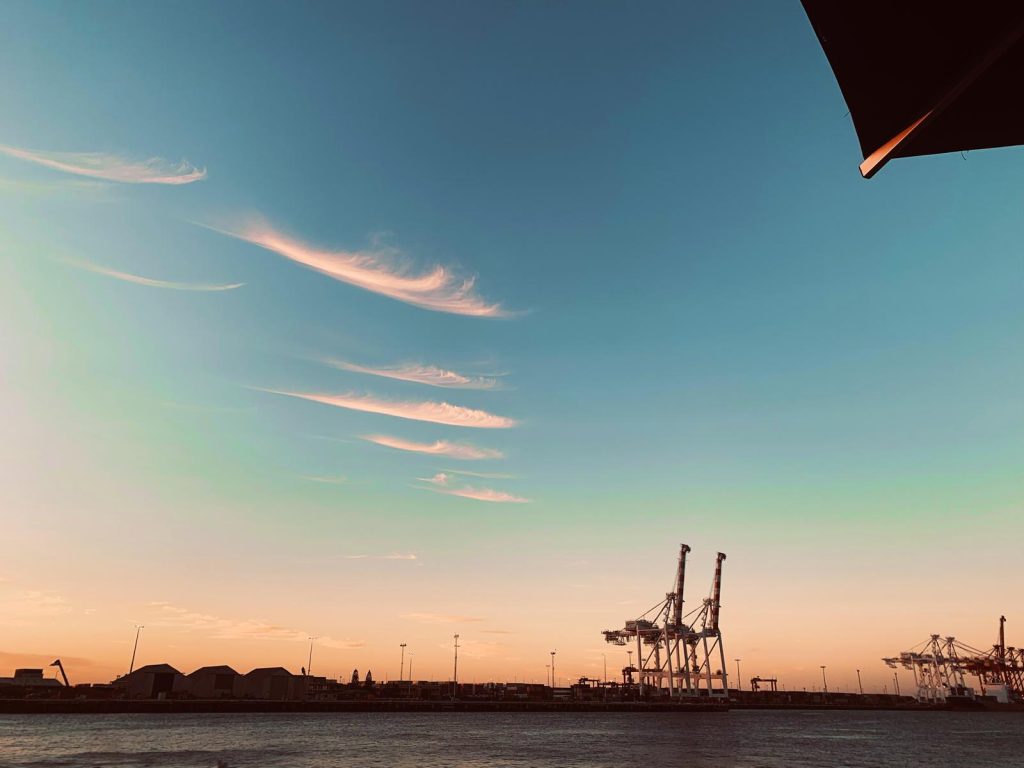
I spent some time living in Perth WA, and one of the notable things is the giraffes. No, not real giraffes. The rusty ones you see down on the docks in Fremantle.
An active port right in the middle of the city, it’s easy to catch glimpses of the mega ships that come to be loaded and unloaded.
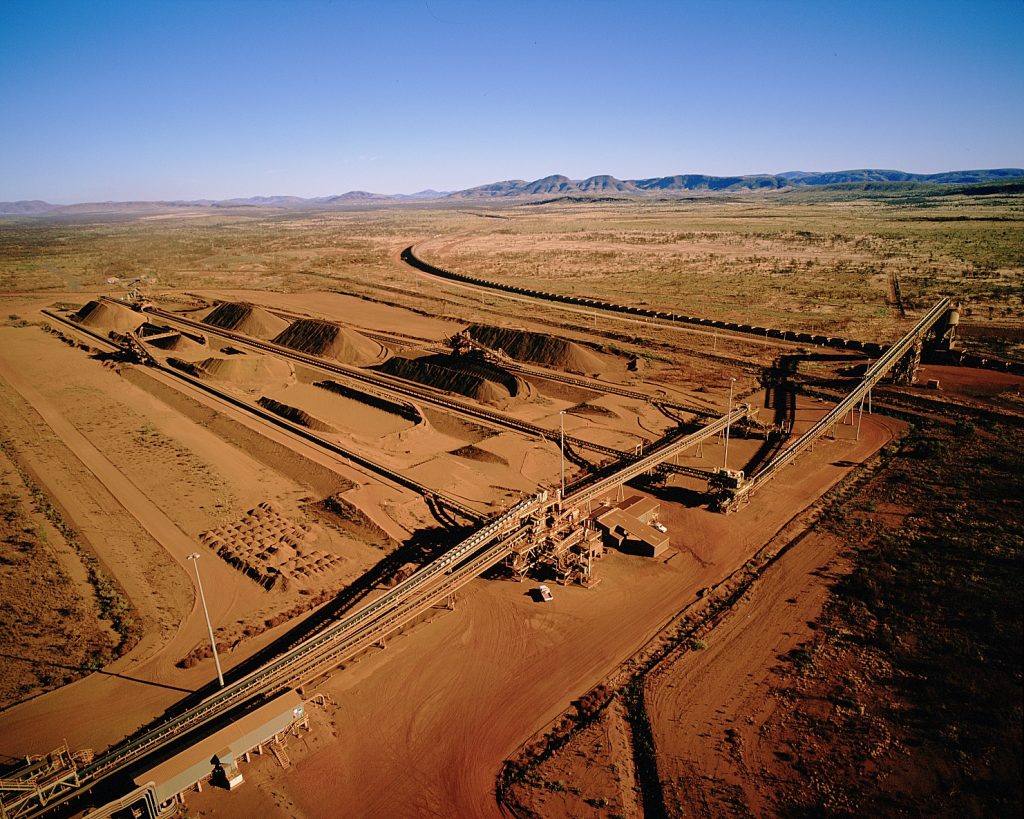
Photo by Riana Cade, Fremantle WAPhoto of West Angelas train load out, Pilbara WA
Working in the desert in the Pilbara as a young engineer, I was witness to the trainloads (literally kilometers of train) of raw materials being shipped to the coast and loaded into giant ships where they would sail to far off shores to be transformed into steel.
It’s no different with this commodity: cotton.
the big players
70% of the worlds raw cotton is grown by the top 4 producers:
China, India, Brazil and the USA.
Smaller producers include: Pakistan, Australia, Turkey, Uzbekistan, Argentina and Mali.
So this is where the cotton is grown.
But where are the mills? Where is this raw material converted into thread, textiles, garments and other finished products?
For that we can look at major importers of raw cotton:
China, Bangladesh, Vietnam, Pakistan, Turkey, India, Indonesia…
no surprises
I’m not sure that any of these importers come as a surprise. All you need to do is look at any label on any piece of clothing you have bought at a big box type store and you will most likely see a ‘made in…’ label that lists one of these countries.
Not only are they importing raw cotton to transform into fabrics, these textiles are then subsequently transformed into garments and other cotton products.
But what about exports?
Brazil, USA, Australia, India, Benin, Mali, Greece are listed. Comparing these countries with the producers list, we can divide the producers into those who:
Produce to export only.
Or produce to sustain domestic manufacturing.
This brings into the equation the outsourcing of labour from high labour cost countries such as USA and Australia, but also pointing to the high demand for raw cotton by large importers who produce the finished goods.
Brazil is an interesting case. It has positioned itself as an efficient agricultural producer and exporter of commodities, with little investment in developing domestic production facilities (mills etc).
What does this all mean for us using our quilting cotton?
A couple of readers mentioned driving by cotton trucks or fields in their home state. Texas in particular is a huge producer of USA cotton.
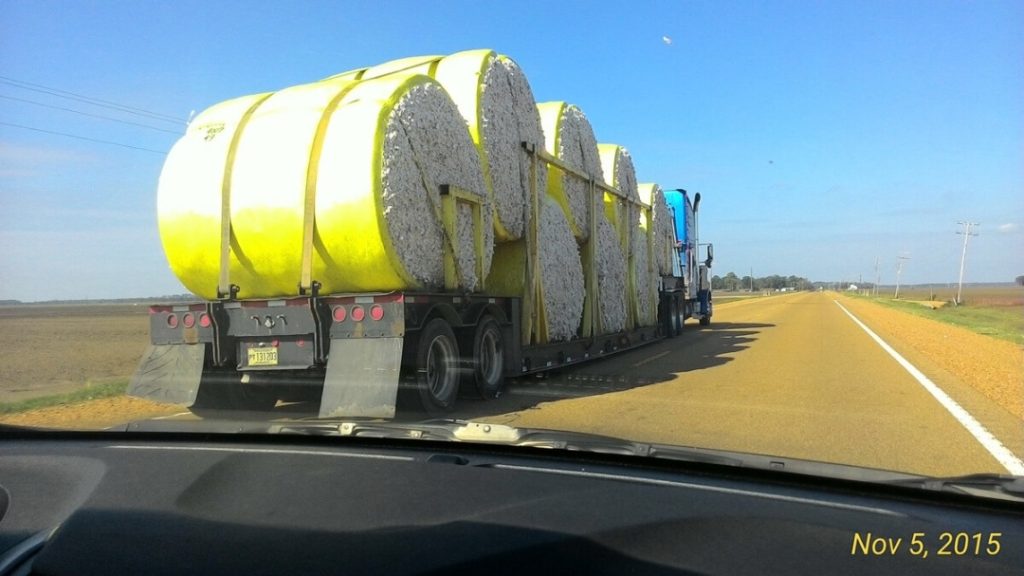
Even I have photos of truck loads of cotton bales in Mississippi from our honeymoon (we were on the Blues Trail).
cotton truck in Mississippi – photo Ally Ryde
But, the majority of this cotton is sent overseas to be spun and woven into fabrics we use.
So, that Kona solid you use? Or that Moda Bella or that Pure Solid by Art Gallery Fabrics, or that sheeting material you got from Joanns, or Spotlight?
It may have been grown down the road, but it was most certainly woven, dyed and finished in one of the importing countries listed above.
an Odyssey…
A plant grown ‘down the road’ certainly goes on a global journey before arriving back at your Local Quilting Store.
Shipped across oceans, touched by many hands and machines before coming back to you again across the oceans.
What a journey we hold in our hands as we work with the raw materials to make our quilts.
It makes me think of the quilts I’ve made.
Some are in Italy, some in Australia, others in Canada, or the USA, or New Zealand.
Think of the kilometers that cotton has travelled…
From where it was grown, to where it was transformed into fabric, to where it was purchased, to where it was made into a quilt, to where it has ended up in its final form.
I don’t know about you, but to me that is pretty mind blowing.
Stay tuned for next week’s installment as we dive deeper into how cotton is made.